

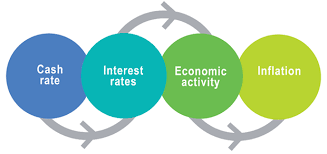
Indian monetary policy is essential for maintaining economic stability and growth. Recent developments highlight its influence on trade and investment.
Understanding Indian monetary policy
The Indian monetary policy plays a crucial role in shaping the country’s economic landscape. It is primarily managed by the Reserve Bank of India (RBI), which uses a variety of tools to regulate the money supply and interest rates. This approach aims to achieve key objectives, including:
- Price stability: Controlling inflation is vital for maintaining the purchasing power of consumers.
- Economic growth: By adjusting interest rates, the RBI encourages or discourages borrowing and spending.
- Financial stability: Ensuring a stable banking system is essential for fostering investor confidence.
Moreover, the RBI’s decisions regarding liquidity and credit availability significantly impact various sectors of the economy, influencing everything from consumer spending to investment patterns. Understanding these dynamics is essential for stakeholders in the Indian economy.
Recent changes in trade policy
Recent changes in trade policy have had significant implications for the Indian economy, complementing the broader framework of Indian monetary policy. These adjustments aim to enhance trade competitiveness and stimulate economic growth amidst global challenges.
Key updates include:
- Tariff Revisions: The government has adjusted tariffs on various imports to protect domestic industries while encouraging exports.
- Free Trade Agreements: India is actively pursuing new trade agreements to foster international partnerships and expand market access.
- Regulatory Reforms: Simplifying trade regulations has been prioritized to reduce bureaucratic hurdles for businesses.
- Export Incentives: Enhanced incentives for exporters aim to boost production and create jobs.
These changes, aligned with the Indian monetary policy framework, are expected to drive sustainable economic growth and strengthen the nation’s position in the global market.
Impact of monetary policy on inflation
The impact of monetary policy on inflation in India has been a crucial area of focus for economists and policymakers. The Reserve Bank of India (RBI) employs various strategies to manage inflation levels, ensuring economic stability and growth. Key approaches include:
- Interest Rate Adjustments: By altering the repo rate, the RBI influences borrowing costs, which can either stimulate or cool down economic activity.
- Liquidity Management: Controlling the money supply helps maintain price stability, directly affecting inflation rates.
- Inflation Targeting: The RBI aims to keep inflation within a specific range, fostering confidence in the economy.
These measures reflect the broader goals of Indian monetary policy, striving not only to control inflation but also to promote sustainable economic growth in the country.
Key strategies for economic growth
The Indian monetary policy has employed several key strategies aimed at fostering economic growth. These strategies include:
- Interest Rate Adjustments: The Reserve Bank of India (RBI) frequently adjusts interest rates to influence borrowing and spending in the economy.
- Liquidity Management: By managing the liquidity in the financial system, the RBI ensures that banks have enough funds to lend to businesses and consumers.
- Inflation Targeting: Aiming for a specific inflation rate helps maintain price stability, which is crucial for sustainable growth.
- Regulatory Measures: Implementing various regulations promotes financial stability and encourages investment.
These strategies collectively strengthen the framework of Indian monetary policy, paving the way for a resilient economy that can adapt to global challenges and opportunities.
Future outlook for India’s economy
The future outlook for India’s economy remains optimistic, shaped by the adaptive nature of Indian monetary policy. As global markets continue to evolve, India is expected to leverage its robust economic framework to foster growth and stability. Analysts predict several key trends that may influence the trajectory of the economy:
- Increased investment in infrastructure: Enhanced infrastructure is crucial for sustainable economic growth.
- Digital transformation: The push towards digitization will drive efficiency across various sectors.
- Focus on sustainable practices: Emphasizing green technologies will align with global sustainability goals.
- Strengthening financial inclusion: Expanding access to financial services will empower underserved communities.
As these elements unfold, the Indian monetary policy will play a pivotal role in navigating challenges and harnessing opportunities for long-term economic advancement.
By Muzammilahmed1810428 via Openverse
Read the original
Related reading
Fortnite Pirate Shop Tokens: The Best Spot to Farm Easily · NVIDIA RTX 50 GPU prices: Worst rise in November · Xiaomi 18 Pro launch: Is it the Best Phone of 2026?