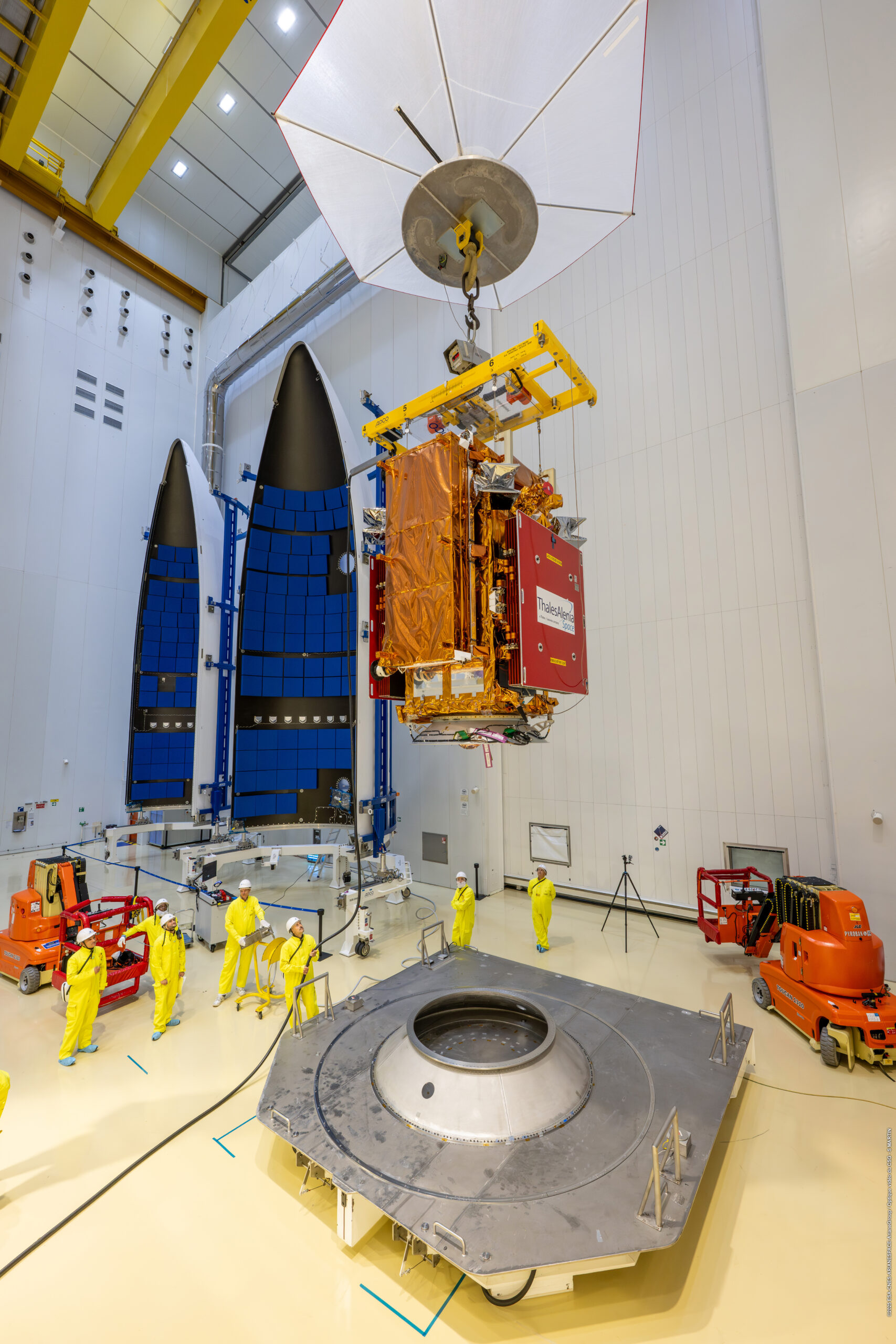
Ariane 6 launch marks a significant milestone in satellite deployment, successfully sending 36 Amazon Leo satellites into orbit.
Overview of the Ariane 6 launch
The recent Ariane 6 launch marks a significant milestone in the deployment of satellites, as it successfully sent 36 Amazon LEO satellites into orbit. This event has generated considerable interest in the capabilities of the Ariane 6 rocket, especially in comparison to its competitors like SpaceX’s Falcon 9.
Designed for efficiency and cost-effectiveness, the Ariane 6 aims to meet the growing demand for satellite launches in the commercial sector. The rocket’s modular design allows for flexibility, accommodating various payload sizes and mission profiles. With this launch, the European Space Agency (ESA) demonstrates its commitment to maintaining a competitive edge in the global space industry.
Some key features of the Ariane 6 include:
- Enhanced Payload Capacity: Capable of carrying heavier payloads than previous models.
- Cost Efficiency: Reduced launch costs make it an attractive option for commercial customers.
- Versatility: Suitable for a wide range of missions, from satellite deployments to interplanetary explorations.
As the space launch market continues to evolve, the Ariane 6 launch represents Europe’s strategic response to the increasing competition in satellite deployment.
Impact of Amazon Leo satellites
The recent Ariane 6 launch has sparked discussions regarding its impact on the deployment of satellites, particularly with the inclusion of 36 Amazon Leo satellites. These satellites are part of a broader initiative aimed at enhancing global internet connectivity, especially in underserved areas.
Amazon’s investment in low Earth orbit satellites represents a significant shift in how companies approach satellite deployment. The Ariane 6 rocket, known for its advanced capabilities, provided a reliable platform for this mission, demonstrating its potential as a player in the competitive launch market.
With the deployment of Amazon Leo satellites, several key implications arise:
- Enhanced Connectivity: The satellites are designed to deliver high-speed internet access to rural and remote regions, which could bridge the digital divide.
- Increased Competition: By launching a large constellation of satellites, Amazon positions itself against established players, potentially reshaping the satellite internet landscape.
- Environmental Concerns: The rise in satellite launches raises questions about space debris and the sustainability of satellite operations.
As the space industry evolves, the success of the Ariane 6 launch may influence future satellite deployment strategies and technological advancements.
Comparison with Falcon 9 flights
The recent Ariane 6 launch has sparked discussions about its effectiveness compared to SpaceX’s Falcon 9 flights. Both rockets are designed to deploy satellites, yet they cater to different market segments and operational strategies.
Falcon 9 has gained significant traction due to its reusability, which drastically reduces costs for satellite operators. This approach allows for frequent launches, accommodating the rapid deployment needs of mega-constellations like Starlink. In contrast, the Ariane 6 aims to offer a more robust payload capacity while maintaining reliability, but it has yet to achieve the same launch cadence as Falcon 9.
Many industry experts argue that while the Ariane 6 launch provides a solid option for heavier payloads, it may not compete effectively with the lower price and efficiency of Falcon 9. Consider the following factors:
- Launch Frequency: Falcon 9’s frequent launches allow for quicker satellite deployment.
- Cost Efficiency: Reusability of Falcon 9 significantly lowers costs.
- Payload Flexibility: Ariane 6 offers larger payloads but with less frequent availability.
Ultimately, the choice between the two may depend on specific mission requirements and budget constraints, highlighting the need for continued innovation in the launch sector.
Future of satellite deployment
The future of satellite deployment looks promising, especially with advancements like the Ariane 6 launch. As the satellite industry evolves, the demand for efficient, reliable, and cost-effective launch solutions becomes increasingly critical.
One of the key trends in satellite deployment is the growing number of small satellite constellations, such as those used by Amazon for its Leo project. These systems require frequent launches, and the Ariane 6 aims to meet this demand with its ability to carry multiple payloads in a single flight.
Moreover, the Ariane 6 launch provides flexibility in payload capacity, allowing it to adapt to various mission requirements. This versatility can significantly enhance the operational capabilities of satellite providers and contribute to more robust global communication networks.
However, competition in the launch market is fierce, particularly with the rapid acceleration of Falcon 9 flights. As companies race to offer the most efficient services, the Ariane 6 must prove its reliability and cost-effectiveness to remain competitive.
Ultimately, the future of satellite deployment will depend on the ability of launch providers like Ariane 6 to innovate and meet the evolving needs of the industry, balancing performance, cost, and environmental considerations.
Technological advancements in space
The launch of the Ariane 6 marks a significant step forward in the realm of space technology, reflecting the rapid advancements in satellite deployment methods. This new rocket is designed to enhance payload capacity and reduce costs, addressing the growing demand for satellite launches.
Several key technological advancements have contributed to the capabilities of the Ariane 6 launch:
- Modular design: The modular architecture of the Ariane 6 allows for flexibility in configurations, enabling it to cater to various mission profiles and payload sizes.
- Increased reliability: With improved engines and a streamlined manufacturing process, the rocket boasts higher reliability rates, ensuring successful missions.
- Cost efficiency: By optimizing launch operations and reducing turnaround times, the Ariane 6 aims to provide a more economical solution for satellite deployment compared to its predecessors.
- Enhanced payload capacity: The ability to carry heavier payloads opens up new possibilities for deploying larger constellations, supporting ambitious projects like Amazon’s Leo satellites.
As the aerospace industry evolves, the Ariane 6 launch stands out as a pivotal development, potentially reshaping how satellites are deployed in the future.
Challenges faced during the launch
The recent Ariane 6 launch faced several challenges that raised questions about its efficiency and reliability in the competitive landscape of satellite deployment. One of the primary issues was the delay in the launch schedule, which pushed back critical timelines for stakeholders involved in the Amazon Leo project. Such delays can jeopardize contractual obligations, impacting not only the companies but also the broader satellite ecosystem.
Additionally, technical complications arose during the final countdown, causing concerns among engineers and mission planners. While the Ariane 6 has been touted for its innovative design and capabilities, these hiccups highlighted the importance of rigorous testing and quality assurance processes that must be upheld to maintain credibility in the market.
Another challenge was the competition posed by established players like SpaceX and their Falcon 9 flights. With rapid turnaround times and lower costs, Falcon 9 has set a high bar for reliability and efficiency. This has pressured new entrants like Ariane 6 to prove their value proposition in an increasingly crowded marketplace.
As the industry moves forward, addressing these challenges will be crucial for the Ariane 6 launch program to establish itself as a viable option for satellite deployment.
By European Space Agency via Openverse
Sources
bsinews.id · Ariane Launch Complex
You might also like
AI code approval: The Smart Way Claude Ship Automates Changes · AI Trade Impact: The Worst Unfunded Bill Consequences · Nvidia share price: Is it worth buying after the jump?