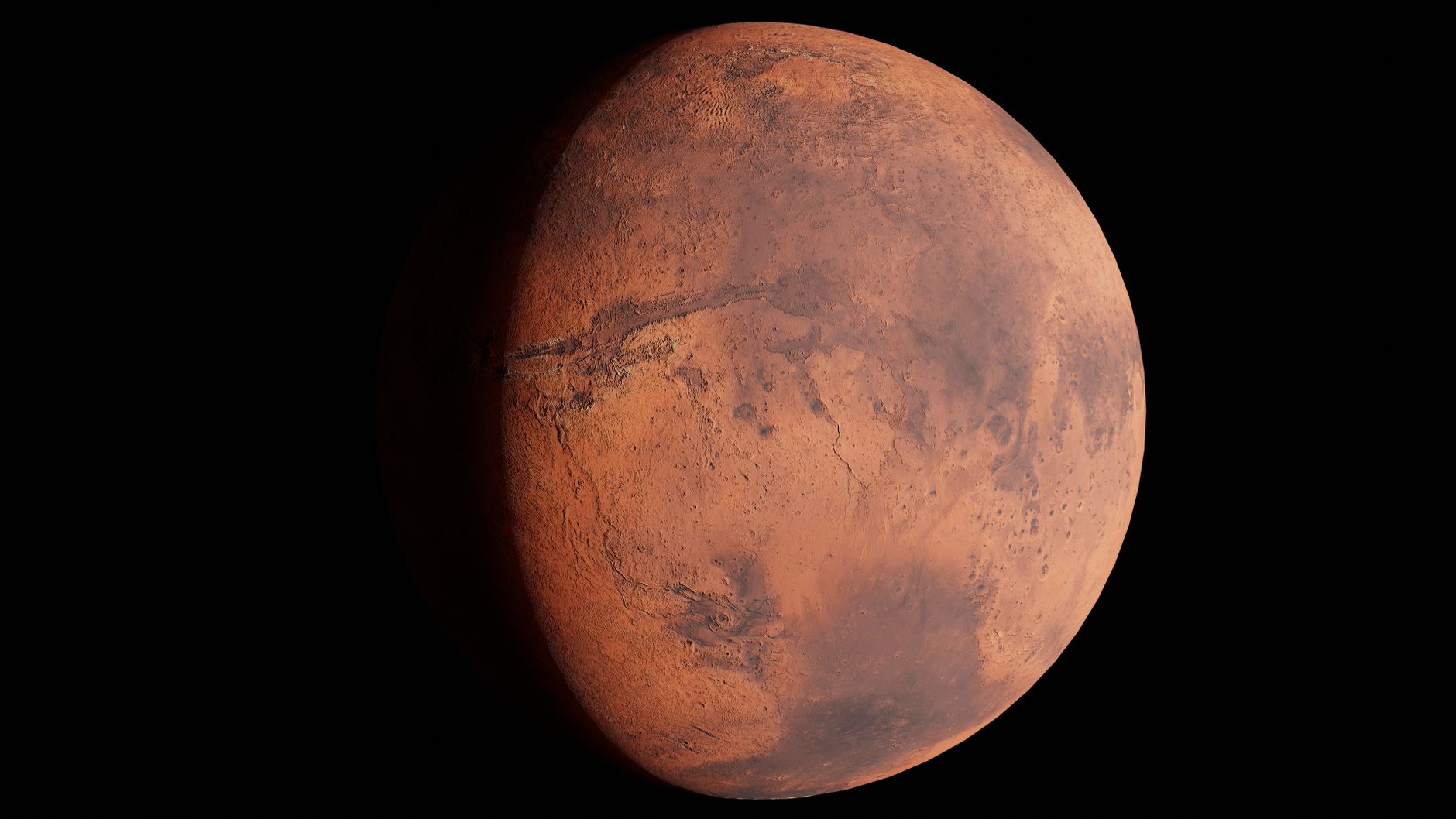
Mars mission Phobos aims to gather crucial samples from Phobos, the Martian moon, offering insights into the solar system’s history.
Overview of the MMX Mission
The Japan Aerospace Exploration Agency (JAXA) has embarked on an ambitious project known as the MMX mission, which stands for Martian Moons eXploration. This cutting-edge mission aims to study Mars’ moon Phobos and collect samples from its surface. Launched in September 2024, the MMX spacecraft is designed to arrive at Phobos by 2025, with the goal of returning to Earth with samples in 2029.
One of the primary objectives of the Mars mission Phobos is to understand the origins of Phobos and its geological characteristics. By analyzing these samples, scientists hope to gain insights into the history of Mars and its moons, which could also provide clues about the early solar system.
The mission involves several key components:
- Orbiting Mars and conducting detailed observations of the planet and its moons.
- Landing on Phobos to collect surface material.
- Returning the collected samples to Earth for comprehensive analysis.
Through these steps, the MMX mission aims to pave the way for future exploration of Mars and its natural satellites.
Significance of Phobos in Space Exploration
The significance of Phobos in space exploration cannot be overstated, particularly in the context of the Mars mission Phobos. This unique moon of Mars offers a treasure trove of scientific insights that could reshape our understanding of the Red Planet and its formation.
Researchers believe that studying Phobos could provide key information about:
- The history of Mars: As a potential remnant from the early solar system, Phobos may hold clues about the conditions that existed when Mars formed.
- Planetary evolution: Analyzing the surface composition of Phobos can shed light on how planetary bodies evolve over time, including the effects of space weathering.
- Potential resources: The moon may contain valuable materials that could support future human missions to Mars, including water ice and other essential resources.
Furthermore, the Mars mission Phobos embodies the spirit of international cooperation in space exploration, as various nations collaborate to unlock the secrets of our neighboring celestial bodies.
Mars mission Phobos: Objectives and Goals
The Mars mission Phobos aims to achieve several key objectives that will enhance our understanding of the Martian moon and its role in the solar system. The primary goal is to collect samples from Phobos, which will provide valuable insights into its composition and formation.
Additionally, the mission seeks to:
- Investigate Phobos’ surface: By analyzing the surface materials, scientists hope to uncover the moon’s geological history.
- Study Martian atmosphere interactions: Understanding how Phobos interacts with Mars’ atmosphere can shed light on both bodies’ evolutionary processes.
- Assess potential for future exploration: The findings may pave the way for future human missions to Mars and its moons.
- Test new technologies: The mission will also serve as a platform to demonstrate advanced robotics and sample collection techniques.
Overall, the Mars mission Phobos represents a significant step towards unraveling the mysteries of the Martian system and advancing humanity’s presence in space.
Technological Innovations in the MMX Mission
The Mars mission Phobos has garnered attention not only for its ambitious goals but also for the technological innovations that underpin the MMX mission. These advancements are crucial for ensuring the success of the mission and the safe return of samples from the Martian moon Phobos.
One of the standout innovations is the development of a sophisticated sample collection system. This system is designed to capture regolith from the surface of Phobos with precision, ensuring that scientists can analyze the materials for insights into the moon’s composition and history.
Additionally, the spacecraft is equipped with advanced propulsion technology that allows for efficient navigation through the Martian atmosphere and its gravitational pull. This technology enhances the mission’s ability to carry out multiple scientific operations while maintaining fuel efficiency.
Moreover, the incorporation of cutting-edge communication systems will enable real-time data transmission back to Earth, allowing researchers to monitor the mission’s progress closely. Through these innovations, the Mars mission Phobos is set to push the boundaries of space exploration.
Challenges Faced by the MMX Team
The Mars mission Phobos has presented a series of challenges for the MMX team as they work towards their ambitious goals. The complexities of operating in the harsh environment of space have necessitated meticulous planning and innovative solutions.
One significant challenge is the harsh radiation levels encountered during the mission. The MMX team has implemented advanced shielding techniques to protect sensitive instruments and ensure data integrity.
Additionally, the gravity of Phobos poses unique difficulties for landing and sample collection. Engineers have had to develop specialized landing systems that can adapt to the low-gravity conditions, allowing for a safe and efficient operation.
Communication delays between Earth and Mars also complicate mission management, requiring the team to devise autonomous systems capable of making real-time decisions without immediate input from mission control.
Lastly, budget constraints have led to a prioritization of resources, forcing the MMX team to focus on the most critical aspects of the Mars mission Phobos while maintaining overall mission integrity.
What We Hope to Learn from Phobos
The Mars mission Phobos presents a unique opportunity for scientists to deepen our understanding of both Mars and its moon, Phobos. Through this mission, we hope to uncover several key insights:
- Origin of Phobos: By studying the composition of Phobos, we aim to determine whether it is a captured asteroid or a remnant from the early formation of the Martian system.
- Surface Composition: Analyzing the surface materials will provide clues about the environmental conditions on Mars and how they have changed over time.
- Potential for Life: Investigating the moon’s geology and potential subsurface water can help us understand if life could have existed on Mars or its moons.
- Future Exploration: The data gathered during the Mars mission Phobos will lay the groundwork for future manned missions by identifying resources and hazards.
Ultimately, the findings from this mission could reshape our understanding of planetary formation and evolution in our solar system.
Future Implications for Mars Exploration
The Mars mission Phobos serves as a critical stepping stone for future exploration of the Red Planet and its moons. By studying Phobos, scientists aim to uncover vital information about the origins of Mars and its geological history. This mission not only enhances our understanding of Phobos itself but also provides invaluable insights into the potential for future manned missions to Mars.
One of the key implications of the Mars mission Phobos is the advancement of technologies that can be applied to subsequent missions. The innovative techniques developed for sample collection and analysis during the MMX mission pave the way for more ambitious endeavors, such as establishing a human presence on Mars. Additionally, the data gathered from Phobos will inform strategies for sustainable exploration and resource utilization on Mars.
As we look toward the future, the Mars mission Phobos is expected to inspire international collaboration in space exploration, fostering partnerships that will lead to groundbreaking discoveries and possibly even the colonization of Mars.
Public Interest in Mars Missions
The recent launch of Japan’s MMX mission to Mars has reignited public interest in space exploration, particularly in relation to the enigmatic moon Phobos. This mission not only aims to gather valuable samples from Phobos but also serves as a catalyst for broader discussions about the future of Mars missions.
The fascination with Mars and its moons can be attributed to several factors:
- Scientific Curiosity: Researchers and enthusiasts alike are eager to understand the origins and characteristics of Mars and its moons.
- Technological Advancements: As technology progresses, the possibilities for exploration expand, making missions like MMX more feasible.
- Public Engagement: Initiatives that involve citizen science and educational outreach have heightened awareness and enthusiasm about Mars missions.
- Global Collaboration: International partnerships in space exploration foster a sense of shared purpose and ignite interest across nations.
As public interest continues to grow, the Mars mission Phobos represents an exciting opportunity to unite people in the quest for knowledge beyond our planet.
Photo by Zelch Csaba on Pexels